
Digital visual design
AI-enhaced
This is my first portrait work of 2025, created through a newly developed technical process. In this piece, I delved deeper into the uniqueness of the “individual”—just as every brand holds its own distinctive culture.
Throughout the creation process, I discovered a subtle sensitivity I hadn’t fully grasped before: a deeper emotional connection with my subject, and a more nuanced understanding of expression and presence.
She has changed profoundly since she was 20. At 50, she will likely change again. But life doesn’t rewind—and I only have this one chance to be 27.
At the same time, I’ve been actively exploring the collaborative potential between digital art and other disciplines such as fashion, continuously pushing the boundaries of my visual language and creative reach.


Workflow breakup
By integrating AI-assisted workflows into traditional modeling processes, I’m able to accelerate project development while enhancing flexibility and adaptability in creative execution.
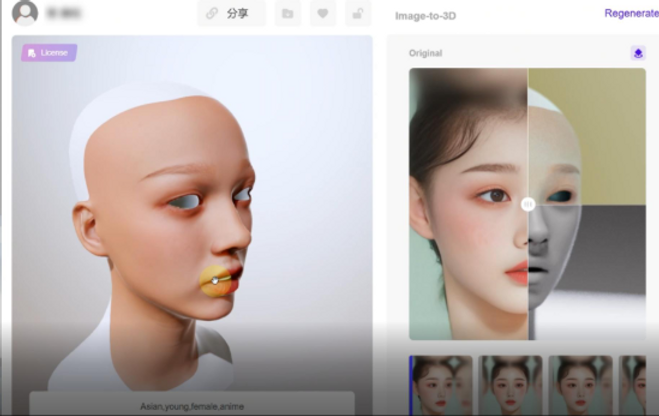
1. Use photo or concept image to get basic shape.


2. Integrating the generated shapes allows for a significant improvement in modeling accuracy.

3. Fine-tuning model accuracy through iterative sculpting steps.


What I found out:
In traditional workflows, ensuring accurate character modeling is one of the most critical steps—not merely in terms of realism or stylization, but in faithfully capturing the essence of the design.
Typically, the modeling process takes one to two weeks, sometimes even longer. However, through repeated experimentation, I found that integrating AI into the process can cut that time in half.
This significant time savings allows for greater creative flexibility in the later stages of production—an incredibly exciting and promising breakthrough.
4. Texture Base color
In this step,we can also combine this step with texture.
For me,using AI means 1+1>2


5. Studio Light test:


Go beyond yourself
